TRANSCRIPTION:
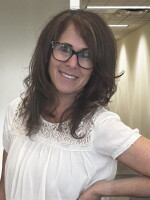
Decky Alexander: This is 89.1 WEMU, and welcome to our weekly conversation on equity and opportunity in our county and in our community. I'm your host, Decky Alexander. As we lead up to Election Day, we at Washtenaw United are expanding and shape-shifting our focus from those who move and shake the nonprofit and advocacy world to those who move shape our policy world, our electeds and candidates for state Senate and state House. Today's guest is state Representative Jennifer "Jen" Conlin, who is running for reelection for a third term in Michigan's 48th district, a district that encompasses parts of Washtenaw and Livingston counties, including areas like Ann Arbor, Ann Arbor Charter Township, Dexter, Webster, and portions of Brighton. A couple notables about Jen Conlin: Jen held a career in journalism for over three decades, living abroad, including London and Egypt, to write news articles and features from around the world, writing for the New York Times with her husband, Daniel Rivkin. She has three children, is part of the Conlin clan, a family who for generations has been dedicated to civic life in Ann Arbor. And she has one of the most remarkable gardens in the county. That is a truth! Welcome, Jen! It's such an honor to have you on the show!
Rep. Jennifer Conlin: Thank you for having me! And that garden does take a lot of weeding, I'm just going to add.
Decky Alexander: Well, it is stunning! And anyone who has the privilege of going there, because you open up your house to lots of things and lots of civic life. It's really remarkable, but it's a lot of work! It's a labor of love, for sure! It's beautiful!
Rep. Jennifer Conlin: Yes, yes!
Decky Alexander: So, Jen, as this is a program in tandem with United Way, our focus is on the social safety net and how porous it is these days. So, most specifically, you may know that the United Way focuses on helping families who are asset limited, income constrained and employed families, or ALICE for short. These families make too much money to qualify for social programs, but not enough to meet their basic needs. So, our questions are, what would or could you do from a policy standpoint? How might you repair and shift the safety net, so that it might support ALICE families and those in poverty?
Rep. Jennifer Conlin: Well, I mean, I think this comes down to what we've all been talking about around affordability. In Michigan, when you look at that ALICE scale, as of 2024, we were ranked 29th nationally in income on the ALICE scale. So, we have--I've got numbers in front of me. You can tell--just over 4,000,000 total number of households that did qualify for ALICE. And in my district alone, and my district goes from Ann Arbor up to Howell and then all the way over to Jackson, so this is a district that includes mostly townships. It's one sliver of northwest Ann Arbor, the village of Pinckney and other than that, is basically pretty rural. It's lakes, it's parks, it's farms. But even in my district, we have 10,000 who are below the ALICE threshold, and I think it looks like I've got the number here, 38,000 of my 92,000 constituents roughly who are falling into that ALICE threshold. And so, this comes down to so many different things, making sure that our people have access to SNAP benefits, which we're obviously so worried about given HR.1 and the new requirements that we have to put around making sure they qualify, but also this error rate that's taking away a lot of our funding in the state for SNAP. We have to be looking at housing, which we have a couple of different bill packages right now in the state House to be looking at how we can help with affordable housing, middle-income housing. And it just comes down to basically health care and making sure that people have their health care. I mean, I did an event with the attorney general, and Dana Nessel was being, on the one hand, kind of funny, saying she'll be out of a job in Jan. 1 because she's done being attorney general. And she looked into what her health insurance would be for her family of four and said it came out to $48,000 a year for her to have COBRA. So, I mean, these are numbers that are insane! And you know, Decky, that I live in a multi-generational home, so my 92-year-old mother lives with us. I'll be pretty honest. We can't really afford a nursing home for her. Having said that, she loves aging in place as well, but nursing is really expensive. And then, my older brother lives with us because he doesn't earn enough to really be able to afford to live on his own. My daughter has moved in with us, who is working to get her master's and be a schoolteacher, and she's working in a Detroit public school right now. She can't afford any rent, so she's living with us. And my DTE bill is about $1,000 a month. It's insane because there's a lot of people in my house. And you've been to my house. It has a beautiful garden, but it also has a lot of old windows because I bought my parents' house that has not really ever been renovated. And so, basically, it's just leaking heat, I believe, so I might have to start taping windows. I don't know. But yeah. So there's a lot we need to do because I even personally feel it. And if I'm personally feeling it, like, what about these people who really are in the ALICE threshold?
Decky Alexander: Well, just to reiterate what the ALICE threshold is, so the bare minimum needed to afford basics in Michigan for a single adult survival budget is $29,580 a year, while a family of four needs $78,216. And that's just the survival budget.
Rep. Jennifer Conlin: Right.
Decky Alexander: That doesn't include leaky windows where you might have to tape things up necessarily.
Rep. Jennifer Conlin: Yeah.
Decky Alexander: So, Jen, how will you make sure, or how have you made sure, that both public and key decision-makers have the data necessary to understand and improve some of the programs that might ensure that ALICE families and all families have their needs met?
Rep. Jennifer Conlin: As you know, we work very closely, This district has three congressional districts, so I have Debbie Dingell here. I have Tom Barrett up in Livingston. I'm the only Democrat elected up in Livingston County. And then over in Jackson is Congressman Walberg. But I will say that when it comes to recently, because Food Gatherers is in my district, kind of right near my house, and I was over talking to them. And one of the things that we need to do federally, at least, is to, if we can, delay this SNAP benefit cost shift implementation for two years, because it's likely to take $300 million out of our budget just to maintain SNAP benefits. So that's federally, and there's only so much that we can do about that. But Congresswoman Dingell and I talk all the time, and that is something we're going to try to do. So, on the state level, we're going to have to get people in to work on that. And I know we've put money in the budget this past year, at least for some of these administrative things, because it's also necessary for Medicaid now that every six months people show their work requirements. And I have farmers who have no idea how to prove they've been on the tractor for three hours a day or four hours a day, nor do they have broadband to like go into a system necessarily and update their Medicare every six months. So, we've got to have a lot of people helping them with that. And then, for housing, we've these two packages we're trying to do. One is called the housing readiness package, which is like a bunch of bills. And I'm personally a little interested in this one just because one of them allows accessory dwelling units, which might mean I could put my mother in something a little bit better than where she is right now in our house. We have to do something because we have to reform some of this zoning in order to encourage more housing.
Decky Alexander: You are listening to Washtenaw United on 89.1 WEMU. I'm Decky Alexander. And today, we are talking with both candidate and state Representative Jen Conlin, on actions and policies she would take to support some of our county's most economically vulnerable residents. And Jen, not surprising, you have answered a lot of the questions that I have had here already by giving some really specific details to some of the possible policies and some of the kind of solutions at the sort of granular township level and then also at the federal level. But let me ask a little specific question regarding some of the housing. So the ALICE report shows that 36% of Washtenaw County families don't make enough as noted to afford a basic budget. And more than half of those families in the county spend more than three out of every $10 they earn on rent. So, you alluded to some of the kinds of accessories, sort of the accessory bill and some other kinds of possible zoning laws, but how will you ensure maybe working families or young Michiganders, people in your multi-generational household or even people exiting homelessness can find housing and entry-level housing here in our county?
Rep. Jennifer Conlin: Yeah, I mean, that's kind of the million-dollar question because everybody says they want it, and then everybody complains when it's going to come near them necessarily. There's some other things we've done too. Obviously, I'm turning 65 next month. I am willing to admit that. We also have a senior tsunami coming. And so our workforce and having these young people as you're talking about is really important to have people take care of the Michiganders like myself who are moving into that upper age group and need help, right? And in my district alone, I have more nurses than any other district in the state of Michigan, because we have Michigan Medicine down here. We have Trinity. We got Lansing hospitals and the VA. I mean, I have so many nurses, and for them to find housing is really difficult because as you're saying their incomes aren't necessarily at that level. So a couple of the other things we've done and we're trying to do is we had a bill we passed, HB 6074, which restricted large corporate and institutional investors for buying additional single-family homes if they already own 100 or more single-family homes in the state and managed to hold a net value of $370 million or more. This is because we have these big investors coming in and just buying up a lot of land and not necessarily doing what we want with that land, in terms of building affordable housing or sitting on it often. So, that means then our construction workers, teachers, nurses, firefighters, you name it, they can't buy a home because these places have been bought up and are being held onto. And so then we had another piece of legislation, the Michigan Housing Opportunity Tax Credit. That works in tandem with federal low-income housing tax credits, and that's supposed to help build more affordable housing. We have another. There's something I have here that Michigan is trying to join other states that have similar programs that provide capital funding for affordable housing projects. And in that case, eligible projects must ensure a set number of units are reserved for renters at or below 60% of the area medium income. So, these are new credits that allow MSHDA to fund, hopefully, it looks like 2,500 new units across the state. Up to 42 million a year in credits will be allocated and nearly doubling the state's ongoing investments in affordable housing. So this is something very much happening. And that's a good thing because, I mean, we just can't do things quickly enough. And I know I was just at the Home Builders Association and had their candidate forum. And obviously, they want to see housing, but they do say that there's so many regulations in place. And of course we care about health and safety. We need to. But at some point, we're making it sort of hard to build as well because we maybe are having too many regulations in place. So we might have to be looking at that. And there's all this new, kind of really great-looking manufactured housing. We might be needing to look at that because obviously it takes longer to do brick-and-mortar. And we've got supply chain issues and tariffs and all these things that have taken the prices up on a lot of the things we need to build good housing. And so we might just need to be looking at really innovative, different ways to deal with it.
Decky Alexander: Is there any particular bill, and you've named several, a bill or proposal or a policy that you've worked on or want to work on that would address some of our community members? A dream?
Rep. Jennifer Conlin: Yeah. I mean, along with Representative Jason Morgan, who represents Ann Arbor, and Senator Jeff Irwin, when we did in my first term, we did this proof of income bill, which I was so proud because it now makes it necessary throughout the state when somebody is trying to rent a property, you have to include in their income, their child care payments or their veterans' benefits. And some of that wasn't being included before. And so they weren't qualifying when that was money coming to them every month, including a housing benefit if they had that. And so we did get that done. That was something that was already happening in Ann Arbor and I think in Lansing, but it hadn't happened throughout the state. I don't know how easy it is to make sure landlords are following that, but if a tenant finds the landlord will not accept them because they won't take these benefits as their income, they can go to the fair housing people and complain and put in a complaint about that landlord. So, I was really proud that we did that. So that's a bill I'm proud to be trying to move, as well as one around inhalers for capping that price and making sure they're available in schools because we have a lot of kids and people who have respiratory problems and need to be able to breathe. I mean, that's obviously a human right.
Decky Alexander: That was State Representative Jen Conlin, running for re-election in Michigan's 48th House District, sharing her platforms and policies as it relates to our county and community's social safety net. Washtenaw United is produced in partnership with the United Way for Southeastern Michigan, and you can hear it right here every Monday. I'm Decky Alexander, and this is your community NPR station, 89.1 WEMU, Ypsilanti.
ABOUT JENNIFER CONLIN:
"As a wife, mother, daughter, caregiver, and native of Washtenaw County, and someone whose relatives have served in city, county, and state governments, and to this day continue to serve on the judicial bench, I am honored to join that legacy and give back to a community that has been so important to me."
"During my decades-long career as a journalist, I had the opportunity to meet people all over the world and share their stories. For twelve years leading up to my election in 2022, I covered the state of Michigan, writing about small businesses, tourism, healthcare, arts and culture, and economic development. I believe that my profession uniquely prepared me to be a state legislator and, indeed, it proved an invaluable asset during my first session in Lansing — one that resulted in historic achievements by the new Democratic legislative majority."
"But our job is not done: In the years ahead, I will continue to work tirelessly to help make our district and state a more equitable, thriving place. Together, I know we can find solutions that will create good-paying jobs, improve education, protect our environment, expand access to high-quality, affordable healthcare, and safeguard the rights of all Michiganders."
This story is part of a series previewing major local races in the 2026 midterm elections. Click here for more of WEMU's local election coverage.
RESOURCES:
Jennifer Conlin for State Representative
WEMU has partnered with the United Way for Southeastern Michigan to explore the people, organizations, and institutions creating opportunity and equity in our area. And, as part of this ongoing series, you’ll also hear from the people benefiting and growing from the investments being made in the areas of our community where there are gaps in available services. It is a community voice. It is 'Washtenaw United.'


Non-commercial, fact based reporting is made possible by your financial support. Make your donation to WEMU today to keep your community NPR station thriving.
Like 89.1 WEMU on Facebook and follow us on X (Twitter).
Contact WEMU News at 734.487.3363 or email us at studio@wemu.org.