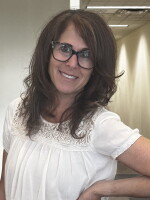
ABOUT CHARLIE REISCHL:
Charlie Reischl is Director of Advancement for the Leslie Science & Nature Center and the Ann Arbor Hands-On Museum. He has worked for nonprofits that serve youth, arts, science and recycling efforts.
RESOURCES:
Leslie Science & Nature Center
Leslie Science & Nature Center on Facebook
Leslie Science & Nature Center on Instagram
Ann Arbor Hands-On Museum on Facebook
Ann Arbor Hands-On Museum on Instagram
TRANSCRIPTION:
Decky Alexander: This is 89.1 WEMU, and welcome to our weekly conversation on equity and opportunity in our county and in our community. I'm your host, Decky Alexander, and I'm honored still and always to welcome you to this week's edition of Washtenaw United. You create a space full of installations and exhibits for a young person to touch and test, to spin and climb, so you can discover how the world works or doesn't, a place to value the sciences and thus inquiry and illumination. You create a space in the natural world, full of all the living things, so a young person can touch and test and see and smell our local ecology. These are the kind of physical, real-world sanctuaries we build for our youth. But building those spaces is only half the battle. Today, on Washtenaw United, we are talking about tearing down those invisible walls with the Access for All initiative at the Ann Arbor Hands-On Museum and the Leslie Science and Nature Center. My guest is Charlie Reischl, Director of Advancement for both organizations, and we are going to look at why keeping these spaces open to everyone in our community should be essential. Charlie, welcome to the show!
Charlie Reischl: Thank you so much for having me! I'm glad to be here!
Decky Alexander: I'm so honored!
Charlie Reischl: Absolutely!
Decky Alexander: Yeah. So maybe, folks, Charlie, have heard you double basing at Green Things.
Charlie Reischl: That's true! At Green Things Farm Collective!
Decky Alexander: Or perhaps my engagement party in 2016, which people don't know, yes, or building community music programs to the Neutral Zone, or creating a tree installation.
Charlie Reischl: Oh yeah! The Tree of Hopes and Dreams!
Decky Alexander: For Ann Arbor Bicentennial. That was stunning! That's beautiful!
Charlie Reischl: That was really fun for us!
Decky Alexander: So, your latest gig now, in the live world, is now anchoring spaces that ask young people to put down the screens, as you shared, and step directly into the physical world at the Ann Arbor Hands-On Museum and the Leslie Science and Nature Center. So, let's begin with you. Tell us how your background, Charlie, and music and live creation shaped the way you view the work you're doing now.
Charlie Reischl: Everyone deserves moments of discovery and inspiration. What this nonprofit's able to do is create experiences that bring forward a concept of science or an occurrence in the natural world and really elevate it in someone's experiential ways. They can watch a butterfly come out of a chrysalis or they can touch a cog that moves the big thing then teaches them about cause and effect with their physical bodies, or they can see how a magnet can make something hover. And then, it prompts these questions, you know? And for me, personally, I'm all about inspiration and enthusiasm in the arts and the sciences in the world around us. And I think that our community needs to gather. And so, if we can create spaces for gathering for families, for classrooms in different ways, for these core memory-making moment gatherings, that's where the magic of world-changing stuff comes into play. And the Access for All initiative, as you highlighted, are the key way that the Museum and Nature Center are removing barriers to access these STEAM and nature-based experiences. And so, I'm so excited to talk about this because it serves the entire region. We're all over Southeast Michigan on a weekly basis, and I just want everyone to know that this place is for you. It's for your family. It's viable. It's totally open and free to the public at our Nature Center, and we have discounted admission on our museum ready for folks who need that. And we want to welcome all the schools back this fall with field trip support in the ways that they need, or we want to visit your school with our outreach programs. We are here for the whole of Southeast Michigan, and the Access for All initiatives make that happen for our organization.
Decky Alexander: So, Charlie, the power of shared experience shapes what we know about ourselves and others. So, what does gathering look like to you at the Leslie Science Center or the Hands-On Museum? Do you have some specific stories or examples of gatherings that have stayed with you?
Charlie Reischl: Well, at the museum, I like to say that nobody comes alone. It just wouldn't make sense. You could come as a parent, but you would bring your child. You could as a child, but wouldn't come alone. You might be a grandparent or a caregiver or a teacher with your classroom, but it's essentially a shared experience. And there's over 250 different exhibits in the museum. I can think of one family in particular, a story that was shared to me last year. We do something called the EBT Museum Admission Discount. I was speaking with a mother of two kids who utilizes this program last year, and she was describing how one of her children has autism, and it's an environment where this child can freely explore. And from the first comments that she was sharing with me about this, I could see how powerful it was for her as a parent to be able to bring her child to a space that she could access whenever she wanted and affordably and that would provide that child something she could instantly recognize as essentially different than other learning environments that child was in. And it's just so important that those opportunities to access these spaces that are curated to be at the highest degree of what's meaningful to somebody on a broad range of developmentally appropriate situations for children. But it's essential that those remain accessible. And I mean, we're really proud. The Access for All initiatives are our key strategic pillar of our work at the Museum and Nature Center. And we're really proud that about 25% of our general admission visitors to the museum are utilizing that discount.
Decky Alexander: You are listening to Washtenaw United on 89.1 WEMU. I'm Decky Alexander. And today, we are having a conversation with Charlie Reischl, the Director of Advancement for two of Ann Arbor's youth-engaged places, the Leslie Science Center and the Ann Arbor Hands-On Museum, on ensuring access for all. So, Charlie, I'm a birder. Little more than a backyard birder, but not like traveling to the rainforest to find like a curl-crusted curry or whatever.
Charlie Reischl: Sure.
Decky Alexander: So, I hear the term "flutter." And I think is this event that you're hosting about birds, to save birds? But I think I might be a little off-base So can you tell us about Flutter and how and when it took flight?
Charlie Reischl: I love it! So, Flutter is our annual fundraiser for Access for All initiatives at our nature center site
Decky Alexander: Okay.
Charlie Reischl: We do it each September. This is the fourth year we've done it. And "flutter" might reference the butterfly effect of your impact on the world around you. It might reference the flap of one of our raptors from our raptor loop, which are going to be visiting our dinner event. People are going encounter redtail hawk and a barn owl and a bald eagle, And they're going to also encounter butterflies. We have butterfly tents. You can go inside and feed them sugar on the tip of a Q-tip together, so they'll climb right under your hand, these little monarchs we do. And Flutter for us is a metaphor of the way that we invest energy into the community and the impacts of those partnerships over time. And so, this year's theme is "discover what connects us all." And that could be the ecology of our natural areas. That could be the connections of all the teachers and the community partners and social service organizations that we support with our Access for All initiatives. And that's also all the folks who want to be a part of something bigger than themselves who are contributing and being a part that event. And actually, today, we have a silent auction live that anybody on the internet can be a part too. It's amazing! So, it's a way that anyone can engage with this Access for All fundraising initiative to make sure that we're supporting families, teachers and caregivers and children across financial precarity, across physical accessibility, and from all walks of neurodiversity to welcome them into our museum and nature center site.
Decky Alexander: So, you shared, Charlie, when you walk through the museum or the Nature Center, on any given day, you can hear over a dozen different languages spoken across all of those public spaces. So, how does that kind of linguistic and cultural kind of diversity shape the way that the Science Center and the museum design programs or build exhibits, et cetera?
Charlie Reischl: That's a great question! So, we're serving, on a weekly basis, an 11-county region in Southeast Michigan. So, we are seeing visitors from all sorts of different cultural backgrounds and ethnic backgrounds visiting our spaces. And also, we're thinking about how they're going to physically interact first with an exhibit at the museum for instance. I'll take the museum site first. So, that site, we designed exhibits, so that someone could physically engage with it, observe cause and effect with the natural phenomenon of the world, and then, it'll prompt them to ask why, how, what? And then, the further engagement with it will explain to that point of "A-ha!" That a-ha moment sometimes isn't in language. But sometimes it is in the science that we share. But sometimes, it's just about seeing I pushed that lever and I saw something happen and then I pushed a button I saw somebody else happened, you know? And the way that our team approaches design of exhibits is very similar to this concept of universal design, so that anyone can engage physically or mentally with these spaces and see that they can have an effect on the world around them. And when it gets to the point of truly understanding what's happening, if that's the developmental place that someone's at with the exhibit, then they start to see that what they take away from that is that they could have an effect on the world. And so, that's the whole concept of empowerment here is that we've got a way to teach you that you can affect things around you and you can understand things around you and then, thereby, you can change the world around you, too.
Decky Alexander: So, looking ahead at the community support for both the center and the museum, what is the most critical message you want listeners to take away about what it actually takes to keep Access for All?
Charlie Reischl: I want people to understand that this is a welcoming place for your family, for your classroom, for your learners in your life, whatever form that's going to take, whether that's yourself or a person you have in mind. It's a fabulous experience to visit the museum or nature center site. And the museum is welcoming folks, hundreds of folks, every single day. We have a membership program, which is a fantastic way to create this ongoing relationship with us as well. And our nature center site also is welcoming folks from a wide region and in a neighborhood level too, and we're preserving natural areas in that area, too, that's supporting the ecosystems of the natural biology of our region as well. So, I just want people to know that this is a place for you, and we are actively finding ways to invest in Access for All. And that's going to be a key part of how we operate going forward at the Ann Arbor Hands-on Museum and Leslie Science and Nature Center.

Decky Alexander: So, at the intersection of preservation and possibility.
Charlie Reischl: Oh, I love that! I'm going to use that too!
Decky Alexander: I'm a poet. So, that was Charlie Reischl, sharing his vision to ensure that some of the county's most magical spaces for young people and families ensure access for all. So, to learn more about Flutter and the Leslie Science Center and the Ann Arbor Hands-On Museum, swing over to our website at WEMU.org. This is Washtenaw United. It's produced in partnership with the United Way for Southeastern Michigan, and you can hear it right here every Monday. I'm Decky Alexander, and this is your community NPR station, 89.1 WEMU Ypsilanti.
WEMU has partnered with the United Way for Southeastern Michigan to explore the people, organizations, and institutions creating opportunity and equity in our area. And, as part of this ongoing series, you’ll also hear from the people benefiting and growing from the investments being made in the areas of our community where there are gaps in available services. It is a community voice. It is 'Washtenaw United.'


Non-commercial, fact based reporting is made possible by your financial support. Make your donation to WEMU today to keep your community NPR station thriving.
Like 89.1 WEMU on Facebook and follow us on X (Twitter)
Contact WEMU News at 734.487.3363 or email us at studio@wemu.org