TRANSCRIPTION:
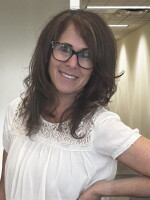
Decky Alexander: This is 89.1 WEMU, and welcome to our weekly conversation on equity and opportunity in our county and in our community. I'm your host, Decky Alexander. And as we lead up to Election Day, we at Washtenaw United are expanding and shapeshifting our focus from those who move and shake the nonprofit and advocacy world to those who move and shake our policy world, our electeds and candidates for state Senator and state House. Today's guest is Mike Eller, who is running for state representative in Michigan's 32nd House District. The district serves 92,000 constituents in Southeast Superior Township, Pittsfield Township, Ypsilanti Township and Ypsilanti. So, Mike is repping EMU! A couple notables about Mike Eller. He's a lifelong Ypsilanti resident, a husband, a father of four sons and a proud grandfather of five. And for more than 35 years, he has owned and operated Populist Cleaning Company that employs teams across Southern Michigan and Northern Ohio. Welcome to Washtenaw United, Mike! Thank you so much for coming!
Mike Eller: Thank you, Decky! It's a pleasure to be here. I appreciate it! That's quite the introduction! I don't have anything to add!
Decky Alexander: I was going to say you have a little local, because you're an Ypsilanti lifelonger. So, I wanted to know if you have like a favorite restaurant or a business or a favorite neighborhood in Ypsi?
Mike Eller: Yeah. I mean, I grew up on Maple Street, which is just around the corner from Depot Town. And I'm just a few blocks away still. And I graduated from EMU in 1990, and that's where I met my wife. So, as far as favorite restaurants in Ypsilanti, probably Red Rock downtown.
Decky Alexander: Oh, I love Red Rock!
Mike Eller: And then also....what is it, Bellflower there on Pearl Street?
Decky Alexander: Oh, I love the Bellflower! It's pretty amazing!
Mike Eller: They do a nice job as well!
Decky Alexander: Well, you are local, because you listed some real locals there. So, we appreciate local in the house here and also an EMU alum. Mike, as this program is in tandem with our United Way, our focus on this particular show is the social safety net and how porous it is these days. So, most specifically, the United Way focuses on helping families who are what they call asset-limited, income-constrained, and employed families, or ALICE for short. And these families, you probably know, make too much money to qualify for social programs, but not enough to meet their basic needs. The ALICE threshold budget, the bare minimum needed to afford basics, for example, in Michigan, a single adult's survival budget is about $29,000 a year, while a family of four needs $78,000. Mike, what would or could you do from a policy standpoint? How would you repair or shift the safety net so that it supports ALICE families and those in poverty?
Mike Eller: So that's a good question, Decky. I come at this kind of topic probably from a different perspective than most people think about it in Washtenaw County. I think about things from a Constitutional perspective and the guardrails that are around that and where government should intervene, but more importantly, where government should not intervene. So, I'm a free-market capitalist. And I know that capitalism kind of gets a nasty rap sometimes, but what I mean by that is when the government withdraws from the market, I believe that the market responds favorably for all people, all walks of life. Now, there's a lot of competition that exists in the free market, and those that work the hardest often rise to the top. But as the tide rises, all boats come up with that. So I'm an advocate of removing a lot of government intervention in the economy. And I think that government intervention in the economy results in picking winners and losers versus just honest, pull up your bootstraps and work hard to get to the next level. So my perspective is a little bit different. Instead of establishing programs, more and more programs, which cost money, which has to come from somewhere, it's more withdraw and set a precedent and a mindset and a culture where it's about hard work and people not being obstructed by other people or government policies.
Decky Alexander: From then a policy standpoint, is there a certain kind of policy or something that you think is obstructing these individuals and families from pulling up their bootstraps that you, if you were elected, would help facilitate?
Mike Eller: Sure. So, I mean, there's a number of things, I guess, as an overarching statement. So, like, the state budget has ballooned by about 40% in the last six or seven years. Prior to COVID in 2019, the budget was about $59 billion, and it's up over $80 billion. Now, I think it's around $83 billion. And don't get me wrong. Both parties have contributed to this, the Republicans and the Democrats. And so, in that ballooning, there's a lot of pork that's out there. And so how does this affect the local guy on the street or the average American or the average Washtenaw County resident? So the cost of housing is always a big concern here in this county. So, a starter home, just call it $300,000, 25% of that $300,000 when it's built, is wrapped up into red tape, fees and permits. So that's like $75,000. If you can reduce that significantly, if that 25% in fees, red tape and permits went away, that's the equivalent of $600 a month in today's starter home mortgage for the average family. $600 a month—that is real money every single month for a first-time home buyer. That's the difference between being able to buy a home and not buy a home. And so that has its trickle-down effect across many different facets of housing. It works its way into the rental market as well. And when people can't buy homes, they're forced into the rental market. When people are forced into the rental market, the demand for rental units goes up. Therefore, the cost of those rental units goes up. That's the simple concept of supply and demand. So, when that happens, rents go higher. And now people are paying higher rents because they can't get into a home. So we can bring the cost of regulation down. People can get into homes more easily. Then rents will come down as well, because there won't be as high a demand for rent. That's one example.
Decky Alexander: You are listening to Washtenaw United on 89.1 WEMU. I'm Decky Alexander. And today we are talking with candidate Mike Eller for state Representative on actions and policies he would take to support some of our county's most economically vulnerable residents. Mike, you alluded to some data points in our last sort of question-and-response. So data may help us to understand and address issues facing everyday Michiganders from what they call SNAP cuts or housing costs or water shutoffs. So how might you use data as a policymaker?
Mike Eller: Well, I mean, I did some thorough study here over the last few months on some of the data at the state budget level. So, for instance, this is another topic that's kind of near and dear to me. Over the last 20 years, the state Legislature has quietly diverted billions of dollars away from local communities. So, for example, the city of Ypsilanti has been ripped off of about $12 million in the last 20 years through improper revenue sharing. So, revenue sharing is a policy that exists in Lansing where they've collected revenues through various forms of taxes. And through a formula, they're supposed to give this money back to the city of Ypsilanti, the city of Ann Arbor, the township of Ypsilanti, et cetera. Well, these local communities have not gotten their fair share of revenue sharing over the last 20 years. And the state has used the money, through some strategic creative financing options, to plug the holes in their budget at the state level instead of returning it to the local communities. If that money is returned to local communities, there's a lot of different things that can happen and be used at the local level. So that's one example of some data points that are interesting and help out at the local level.
Decky Alexander: So, Mike, building on something you alluded to a little bit earlier, H.R. 1, otherwise known as One Big Beautiful Bill Act, is requiring our state to implement work requirements for Michiganders who rely on SNAP and Medicaid. More than 105,000 fewer Michiganders received SNAP in August, compared to January of this year. Do you have a platform to either strengthen the SNAP system at this pivotal time? And how do you feel about the requirements as part of One Big Beautiful Bill?
Mike Eller: Well, first of all, I was not – I don't support the One Big Beautiful Bill just because it increases the debt ceiling on our national debt by a lot. And both the Republicans and the Democrats over the years have been responsible for those debt ceiling increases. When you bring it down to the SNAP project, consistent with sort of what I opened with, is pulling government out of the average person's daily life more and more. I'm not an advocate of SNAP. I think that increased benefits for people, it has to come from somewhere. So it's either coming out of your pocket and my pocket or the money's being printed and redistributed. So printed money causes inflation, and we see what that's gotten us today. So, for those reasons, I'd like to see major cuts in spending of things that are outside of infrastructure. And then the money stays initially in people's pockets, instead of going to the government and getting redistributed through programs that I just don't think are healthy.
Decky Alexander: SNAP, which you're not necessarily supportive of, SNAP's impact will obviously goes beyond just putting food on a table, and data shows that it has downstream effects on anything like maternal or physical and mental health. It also determines whether people can afford other necessities like rent, which you alluded to earlier. As a state representative, what steps might you take, or do you think you should take, to fill those gaps and address those kinds of, for lack of a better word, trickle-down effects on those on federal cuts, which you're advocating for?
Mike Eller: Yeah, so there's a lot there.
Decky Alexander: I know. It was like four questions in one.
Mike Eller: When I say a lot, I mean, this doesn't get fixed overnight. None of this gets fixed. It's just an unraveling of things that have compounded for many, many, many years. And so, from my perspective, as I shared, less government is better. Then it has to be unraveled one step at a time. And so that can take a while. Otherwise, it can become a bloody mess if you do it all too fast.
Decky Alexander: Well, here's your opportunity to talk about a bill or a policy. So, is there any particular bill or proposal or policy that you would want to unravel or want to work on that would address some of our community members, those who have limited assets, but not so limited they're eligible for resources and benefits. Are there some bills or a future policy you'd like to work on and/or construct?
Mike Eller: This is an example. So this deals with removing the property transfer tax at closing. So this is one small example. So why are we paying a property transfer tax at closing for a first-time home buyer when they are going to be paying property taxes on the home the minute they take possession of the home? That's a bill that is active. We should grab a hold of that and take that forward and remove that. That's one small step to put money back in the pockets of first-time home buyers. There's also legislation that's active, regarding removing the six mills that the state gets on property taxes. I'm a fan of reducing property taxes across the board. I'm a fan of putting a freeze on property taxes for senior citizens. I mean, we see senior citizens that are losing their homes because they're on fixed income, yet their property taxes are still going up. And there's active legislation addressing that as well. So, if you can remove six mills from the state level, that's a big chunk of money that people get to hold onto, which helps them buy milk, eggs and bread. So those are just a couple of pieces of legislation that are there. They just need to be pushed forward.
Decky Alexander: So, Mike, thank you so much for your time! And that was Mike Eller running for State Representative District 32, sharing his platforms and policies as it relates to our county and community social safety net. Washtenaw United is produced in partnership with the United way for Southeastern Michigan. And you can hear it right here every Monday. I'm Decky Alexander, and this is your community NPR station, 89.1 WEMU Ypsilanti.
This story is part of a series previewing major local races in the 2026 midterm elections. Click here for more of WEMU's local election coverage.
ABOUT MIKE ELLER:
"I’m running for state Representative because I believe Michigan government must once again serve residents, families, and small businesses—rather than expanding its own size and power."
"I am a lifelong resident of Ypsilanti, a husband, father of four sons, and proud grandfather of five boys. For more than 35 years, I’ve owned and operated a business employing teams across southern Michigan and Northern Ohio."
"My commitment to our community includes active involvement in the Republican Party":
- Member, Washtenaw County Republican Party Executive Committee
- State Committeeman, Michigan Republican Party
- Precinct Delegate, Ypsilanti
RESOURCES:
WEMU has partnered with the United Way for Southeastern Michigan to explore the people, organizations, and institutions creating opportunity and equity in our area. And, as part of this ongoing series, you’ll also hear from the people benefiting and growing from the investments being made in the areas of our community where there are gaps in available services. It is a community voice. It is 'Washtenaw United.'


Non-commercial, fact based reporting is made possible by your financial support. Make your donation to WEMU today to keep your community NPR station thriving.
Like 89.1 WEMU on Facebook and follow us on X (Twitter).
Contact WEMU News at 734.487.3363 or email us at studio@wemu.org.