TRANSCRIPTION:
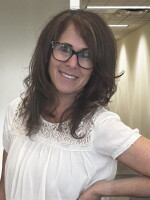
Decky Alexander: This is 89.1 WEMU, and welcome to our weekly conversation on equity and opportunity in our county and in our community. I'm your host, Decky Alexander, and as we lead up to Election Day, we at Washtenaw United are expanding and shape-shifting our focus from those who move and shake the nonprofit and advocacy world to those who move and shake our policy world: our electeds and candidates for state senator and state House. Today's guest is state Representative Jimmie Wilson Jr., who is running for re-election for a third term in Michigan's 32nd House District. He serves 90,000 constituents in Superior Township, Pittsfield Township, Ypsilanti Township and Ypsilanti. Jimmie is repping EMU! A couple notables about Jimmie: He grew up in West Willow neighborhood in Ypsilanti Township, where his parents still live. He's a licensed aircraft mechanic building wind turbines. Eventually, he went to Ford Motor Company at the Rawsonville plant, where he joined UAW 898 and became a journeyman electrician. His journey is the journey of what it means to breathe local, serving 18 organizations including Habitat, Shriners and the NAACP. Jimmie is married to Kamilah, has four boys and one who goes here at EMU's Early College Alliance. Welcome to Washtenaw United, Jimmie! Is there some other local love we should lift up? A favorite restaurant? A neighborhood? A WEMU personality?
Jimmie Wilson Jr.: Yeah. Decky Alexander!
Decky Alexander: Oh my God, I love it! Really, do you have a local love, Jimmie, that you love something locally because you are really a localist rooted here?
Jimmie Wilson Jr.: Oh, yes! The Golden Egg.
Decky Alexander: Oh nice!
Jimmie Wilson Jr.: The Golden Egg Restaurant right on Washtenaw. Folks from EMU are always up there.
Decky Alexander: It is the local place where locals go. I love it! Well, this is the Washtenaw United show where we're really focused, Jimmie, on kind of a partnership with the United Way that focuses on the social safety net. And we really want to discuss how porous it is today. So, most specifically, United Way focuses on helping families, you may know this, who are asset-limited, income-constrained and employed families, or ALICE for short. These families make too much money to qualify for social programs, but not enough to meet their basic needs, so really specifically, the ALICE threshold, the bare minimum needed to afford basics, for example in Michigan a single adult's survival budget is about $29,000 a year, while a family of four needs $78,000. So, Jimmie, what would or could you do from a policy standpoint? How you might repair or shift the social safety net, so that it supports ALICE families and those in poverty?
Jimmie Wilson Jr.: Yes, I appreciate the time. And then, that's a great question because I think throughout my four years of state rep, I think I went in talking about housing and food insecurities and health care and education. And here we are four years later. And while we have touched on those four subjects while in the state Legislature, there's so much more to do, especially when we see cuts from the federal level. So I kind of look at it as the four Hs. I have my four Hs plan as housing, hunger, health care and homework. And then, when you're talking about the ALICE statistics there, I mean, this touches on all those things. We're not addressing the housing issues, whether that be building more housing or just landlord-tenant issues in general. Folks are still struggling. We're not addressing this food insecurity, making sure that our food banks have plenty of food for folks available, but also trying to backfill some of the food stamp cuts that the federal level have done consistently here over the last two years, and it looks like it will continue potentially. This is a struggle for folks. When we talk about health care, health care always shows up every few years in the national news and right here in Michigan when we're talking about different candidates talking about health care. This is a big issue that's holding people back, so being able to really get over that threshold that you just talked about. So we have to address the health care. I think that here in Michigan, some of my colleagues, my state reps and state senators here in Washtenaw County, we're trying to partner on getting some kind of whatever title we give it: new universal health care, Michigan health care or whatever we tagline. At the end of the day, government has to start taking care of its people, especially in health care, because the health care costs are just absorbing it and getting out of control. And then, that final H was homework, and it's just the education piece because what we've seen is that folks who are in those poverty instances is, a lot of times, that does trickle down into the education because how are you able to focus? How are you able to make it to school if your family's going through all kinds of issues at home in regards to finances and things of that nature? So the education piece is kind of twofold. In the classroom, we have to make sure we're giving the resources for teachers, but we also have to address those other issues I just talked about, so that way they can focus on the homework and do the thing.
Decky Alexander: You are listening to Washtenaw United on 89.1 WEMU. I'm Decky Alexander. And today, we are talking with both candidate and state Rep. Jimmie Wilson Jr. on actions and policies he would take to support some of our county's most economically vulnerable residents. Jimmie, data helps us understand and address the issues, whether they are being the the four Hs facing everyday Michiganders, whether that's SNAP cuts or the housing or water shutoffs. How do you use data as a policymaker?
Jimmie Wilson Jr.: It's very important because we have so many folks who are reaching out to us, whether they be phone calls, emails, potentially text messages if they have our contact info, folks who are coming to Lansing, meeting with us, taking the time out of their schedule to meet with us. And there are folks who just say things, and maybe it's correct. Maybe it's not. But when you can lay out data in front of us, it's for most — pretty much most of my colleagues in Lansing — if you lay out the data in front of us, it's not just a myth anymore. It's not just a he said, she said. It's literally this is what's happening on the ground level and so the data is so important. So, out of those stats you just mentioned earlier, we can't ignore that. And so it also helps us have a foundation of where we can build from also.
Decky Alexander: Well, data are people. And we often think of it abstractly, but ultimately these represent the people that you're serving. Jimmie, H.R. 1, which you mentioned a little bit about federal cuts earlier, otherwise known as the One Big Beautiful Bill Act, is requiring our state to implement work requirements for Michiganders who rely on SNAP and Medicaid. And more than 105,000 individuals fewer Michiganders received SNAP in August compared to January. So what is your platform to strengthen the SNAP system at this really, really pivotal time?
Jimmie Wilson Jr.: I hadn't got that data point yet, but I knew it was going to be a very large number. We were talking about it during the budget season earlier this year, which our budget time is roughly February to June or July-ish timeframe, but in our budget that we just passed in July, which will start to take effect around Jan. 1. Technically, it goes into effect Oct. 1, but implementing things takes a little time. So, in January, what you'll see coming out of the [Michigan Department of Health and Human Services] budget are more caseworkers to work with individuals so they are not falling through the cracks, because obviously, as you know, folks have to recertify every six months now, as opposed to every 12 months. And sometimes people may lose things in the mail or paperwork getting lost and/or the timing is just so quick with all the things going on in life, they missed the certifications and they lose benefits. And so what we've done at the state level is say, "Hey, we're going to have a lot more caseworkers to work with individuals so they don't miss those certifications." And so we can kind of almost, if we have to, if necessary, we will hand-hold and get people the benefits they need, so we're going to make sure that people are not missing out on those timelines, but also this new work requirement. We're going to have folks working with individuals and kind of making sure that they don't have to do everything on their own or by themselves. So, that's one piece that we were able to put in the budget this year, even in divided government, because it's really transcended. It really shouldn't be a partisan issue when you're talking about food and health care and all the things, because it really goes across all districts in the state of Michigan. So we were able to get bipartisan support on making sure there are more folks available to work with people in these categories to make sure they're not losing their benefits.
Decky Alexander: We always need navigators in any time, but particularly in this time, so thank you for that. So one of the things that the ALICE report shows to me is that 36%—here's the data point of the Washtenaw County—of families don't make enough to afford a basic budget. And more than half of the families—this is probably going to be no surprise to you—in the county spend more than three out of every $10 they earn on rent. How will you ensure working families, young Michiganders, our college students here and people exiting or trying to exit homelessness can find entry-level housing?
Jimmie Wilson Jr.: I know that EMU has worked on some housing themselves. Fortunately they got on board with understanding this crisis we're in. And then there's other nonprofits around the area. Even Trinity Health has gotten involved in trying to create more housing. And so there's entities that may not have been in the housing space that now realize, like, "Hey, we need to all pitch in and help out." And so part of that is building more housing, but making sure that there are tax credits in place that can subsidize to make sure that it's affordable for folks not falling through the cracks. But with that, I think earlier I was mentioning landlord tenant issues. And this isn't all landlords. It's just to certain ones who are—seem to maybe add extra fees that are unnecessary that's just taken from that bottom line of folks that are already strapped for cash. And then there's extra fees for exorbitant amounts of things that may be not necessary. And so we actually just passed some legislation on the state level to try to cut out some of those fees so that rents can actually hopefully stay at least some kind of a baseline.
Decky Alexander: Jimmie, is there any particular bill or bills or proposal or policy that you have worked on or want to work on that would address, and you alluded to it a little bit earlier with your four Hs. Some of our communities or community members, those who obviously are ALICE, [have] limited access, but not so limited they are eligible for some of these resources and benefits. Is there any particular bill or proposal that you really want to work on or construct?
Jimmie Wilson Jr.: I would say the education piece in regards to making sure we have free breakfast and lunch. I think that was a big one where it just went across all demographics. And then we actually got it not just put in the budget. We actually were able to finally pass a law. This is going to maintain in perpetuity. That's just one little piece that helps families be able to not have to worry about that. Not only are they rushing in the mornings to get ready for work and all that and get them off to school, you're having to worry about breakfast or lunch. And so, I think it also helps them with their bottom line, not having to worry about the cost. It also helps schools as well. And so they don't have to worry as well. You know, the money's there. So I think that was one thing I was able to work on, the school aid budget last term. This term, I've dove a little bit more into health care, in regards to more mental health care, and talking with my colleague Felicia Brabec, who's a great mental health advocate, and how some insurance companies are not paying for mental health services the way they should be, or they're denying services, or they have such strict rules that people can't access the mental health that they need. And so we're trying to come up with legislation. This is one that I want to continue to work on next term if elected in November to make sure that folks have that extra piece because when we're talking about all these different aspects, these four Hs, it can be very stressful. We got to make sure folks can have some kind of peace and harmony in their lives, and we got to make sure mental health services are available. So we want to make sure that we're holding insurance companies accountable to make sure that we have access.
Decky Alexander: That was state Rep. Jimmie Wilson, running for re-election in Michigan's 32nd District, sharing his platforms and policies as it relates to our county and community social safety net. Washtenaw United is produced in partnership with the United Way for Southeastern Michigan, and you can hear it right here every Monday. I'm Decky Alexander, and this is your community NPR station, 89.1 WEMU Ypsilanti.
ABOUT JIMMIE WILSON JR.
Rep. Wilson was born and raised in Ypsilanti. Both the paternal and maternal sides of his family are lifelong residents of the Southside and Appleridge neighborhoods. He and his wife, Kamilah, continue the family tradition by raising their four boys in the community. The connection to Ypsilanti is important to him as a representative and community member. Longevity in the community brings a deep understanding of the community’s needs and places Rep. Wilson in a position to firmly advocate for the future and direction of Ypsilanti. Rep. Wilson works to empower his constituents and ensure their voices are heard.
Rep. Wilson attended the Michigan Institute of Aviation and Technology, where he became a licensed aircraft mechanic. Due to concerns over climate change and the environment, he shifted his career and began to work at Siemens Energy, where he built wind turbines, advancing to technical field advisor for the company. After working in renewable energy around the country, he sought a career that provided more time with his family and in his community. Before taking office, he worked 11 years at Ford Motor Co.'s Rawsonville Plant as an electrician.
At Ford, he became active in UAW Local 898 in 2014 and was elected trustee. In 2016, he was elected to the Ypsilanti Township Board of Trustees and was re-elected for a second term. Rep. Wilson has been an active member in his community, holding positions at the Ypsilanti Township Zoning Board of Appeals, Habitat for Humanity of Huron Valley Board of Directors, Washtenaw County Community Action Board, Washtenaw County Jury Board, Washtenaw County Violence Prevention Task Force, Washtenaw County Equity Partnership, Youth Justice and Schools subcommittee, Executive Board Trustee of the 12th Congressional District Democrats, Michigan Democratic Party State Central Delegate, co-chair of outreach for the Eastern Washtenaw Democratic Club, chairman of the Washtenaw County Black Caucus, Coalition of Black Trade Unionist, UAW CAP Council, UAW young workers council and NAACP Ypsilanti.
With many years of diverse experience and dedication to the Ypsilanti community, Rep. Wilson shapes his legislation with priorities such as worker rights, union rights, criminal justice reform, access to housing and environmental protection. He knows what hard-working Michigan families need, and he knows how important state policies are in making change happen. Rep. Wilson always advocates for and supports better government to reflect the needs of Ypsilanti, his family, his neighbors and the state.
This story is part of a series previewing major local races in the 2026 midterm elections. Click here for more of WEMU's local election coverage.
RESOURCES:
Jimmie Wilson Jr. for State Representative
Jimmie Wilson Jr. on X (Twitter)
Jimmie Wilson Jr. on Instagram
WEMU has partnered with the United Way for Southeastern Michigan to explore the people, organizations, and institutions creating opportunity and equity in our area. And, as part of this ongoing series, you’ll also hear from the people benefiting and growing from the investments being made in the areas of our community where there are gaps in available services. It is a community voice. It is 'Washtenaw United.'


Non-commercial, fact based reporting is made possible by your financial support. Make your donation to WEMU today to keep your community NPR station thriving.
Like 89.1 WEMU on Facebook and follow us on X (Twitter).
Contact WEMU News at 734.487.3363 or email us at studio@wemu.org.