TRANSCRIPTION:
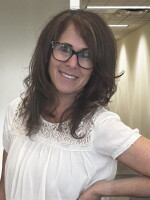
Decky Alexander: This is 89.1 WEMU, and welcome to our weekly conversation on equity and opportunity in our county and in our community. I'm your host, Decky Alexander. And as we lead up to Election Day, we at Washtenaw United are expanding and shape-shifting our focus from those who move and shake the nonprofit and advocacy world to those who move and shake our policy world: our electeds and candidates for state Senator and state House. Today's guest is former County Commissioner and state Representative District 33 Felicia Brabec, who is running for state Senate in Michigan's 15th. This district includes parts of Ann Arbor, Milan, Macon, Manchester, Pittsfield, Saline, Superior, Ypsilanti Township and Ypsilanti. She is aiming to serve WEMU listeners, excluding my mother-in-law, who is in West Bloomfield and now streams the show. A couple notables about Felicia. She is the daughter of parents who would not have been able to be legally married just six years prior. She has a doctorate in clinical psychology, a master's degree in clinical social work, owner of a small business, is an impassioned and dedicated sports fan. Felicia lives in Pittsfield Township with her husband David, a Pittsfield Township trustee, and two kids, who are all equally tall. I think Felicia may be the shortest person in her crew. Felicia is also the lover of the local, and you can see her most weekends at Knight's in Ann Arbor, where she basically knows the entire staff and most of the patrons. Felicia, welcome to Washtenaw United! We are so happy to have you here!
Felicia Brabec: Oh, Decky, thank you so much for having me! I'm excited for our conversation and to really get into the nitty-gritty of how we can work with and help our community!
Decky Alexander: Thank you so much! So here is our first question, Felicia. As this program is in tandem with United Way, our focus is on the social safety net and how porous it is these days. And most specifically, as you know, I think, the United Way focuses on helping families who are asset-limited, income-constrained and employed families, or ALICE for short. So these families, just for some data, make too much money to qualify for social programs, but not enough to meet their basic needs.
Felicia Brabec: That's right. That's right.
Decky Alexander: So, an ALICE threshold in Michigan, a single adult survival budget, is about $29,000, while a family of four needs around $78,000. So, what are you doing or have done from a policy standpoint? And how would you repair and shift the safety net so that it supports ALICE families and those in poverty, Felicia?
Felicia Brabec: Yeah, that's a great question, Decky. And I want to just add some additional context to what you offered. If we're looking here in Washtenaw County, where we're located, the number of folks who are ALICE-impacted is about a third of our households—a third! But if we look at the district, the Senate district that I'm hoping to represent, the number of folks below the ALICE threshold—or the percentage of folks below the ALICE threshold—is 41% in District 15.
Decky Alexander: Oh my gosh!
Felicia Brabec: And so there are a lot of things that we need to look at. I mean, that's a shocking number, right? I mean, it's the things that we know, right, like that our area in our county, Washtenaw County specifically, is the eighth most or the most segregated county economically in our state, right? These are not things to aspire to, right? And so there are a lot of ways that we need to address these issues. And so some of the ways that I think about, breaking this down, because when you hear that, right, 41% in our district is impacted in this way — that can be really overwhelming. And so, when I think about, "Okay, how are we going to tackle these issues?" I think about different buckets. You know, I think about housing. I think about food issues and food insecurity. I think about child care. I think about transportation, seniors on fixed income. So these are the — kind of the bigger buckets that at least I think of. I know that there are more, but these are the ones that are top of mind for me. And each one of those kind of areas, there's devastating data about what's happening. But there also has been work, and people have come together to be able to address these issues and that has been the hopeful part. So I don't know, Decky, if it's helpful to take one or go through all of those. What would be helpful?
Decky Alexander: I think the one that you might be most familiar with or one is the most pressing or sort of relevant in this moment in time— I mean, all of them. But if there's one that you want to touch on a little bit more, I think that would be helpful.
Felicia Brabec: Sure, sure. It's so hard because I want to talk about all of them, right? But it's one of the things that we know that impacts, and all of these.... well, a lot of them impact all of us. But housing, for sure, is something that we struggle with here in our area. We have a massive shortage of affordable units. I mean, the Ann Arbor Area Community Foundation did their big housing study. That came out in 2025. It found that we need 11,000 new units for folks earning under $35,000. And we need another 8,700 units for those folks making under $75,000. In Washtenaw, when we look at home ownership, ownership of a house in general, on average, has surpassed half a million dollars.
Decky Alexander: Wow!
Felicia Brabec: And so, thinking about kind of the economics of that, it leaves us at this place where we have 41% of folks who have challenges around these issues. And so I think about what we've done in terms of permanent supportive housing. Our current state senator, Sen. Jeff Irwin, has been a huge proponent of permanent supportive housing. I've been able to join him in getting some appropriations for us. These are programs to help people stay housed with wraparound services. And the other thing that I think about is how we are all working, the different layers of government, how the state government is working with the county government and is working with municipal government. None of us are going to be able to address these very large issues by ourselves. And I think about at the county level, the workaround making sure that we have the warming shelters working with our local nonprofits, right? We've had the opening of the new family shelter on the east side of our county. All of these programs and different opportunities to be able to support folks, they don't happen in a vacuum, right? We all need to be working on this again at the different levels of state government to be able to serve our folks, particularly when we're thinking about kind of the data that we laid out that can sometimes just seem so overwhelmingly impossible.
Decky Alexander: You are listening to Washtenaw United on 89.1 WEMU. I'm Decky Alexander. And today, we are talking with state Senate candidate Felicia Brabec on actions and policies she would take to support some of our county's most economically vulnerable residents. So, Felicia, you were mentioning a little bit about cuts and a little bit kind of we really need to be dealing with a lot of different things at the same time. So HR 1, otherwise known as this One Big Beautiful Bill Act, is kind of encouraging, requiring our state to implement work requirements for Michiganders who rely on SNAP and Medicaid. More than 105,000 fewer Michiganders received SNAP in August compared to January of this year. So what is your platform to strengthen the SNAP system at this really, really pivotal time?
Felicia Brabec: So, again, we have policy implications that have devastating impact for us here. In terms of food security issues, Decky, we know that 14% of our Washtenaw County residents, that's 51,000 people, are food insecure. 51,000. Predominantly, Black and Latino households are impacted, disproportionately impacted. We have college students. So a lot of folks can forget that we have college students who are really struggling. Sometimes the data can show us one in three college students are struggling with food insecurity. And so, when I think about what we can do on a federal level—excuse me, on the state level—one of the things that we have not done is increase it. The federal government allows us to have up to 48 months of access to benefits. We have not adopted that as our standard. We have a much lower threshold. And so I've always wondered that. I will continue to work with HHS, our Health and Human Services Department, on this. If, federally, we're saying that folks have access to these benefits for this long, why aren't we doing that as a state? And I know that we are coming up to the election here. My hope is that we see some changes on the federal level to stop some of these devastating cuts. You talked about the 105,000 people, but in addition to the 105,000 people, it is coming up with hundreds of millions of dollars for additional policy changes that say that the state has to come up with these administrative costs that the federal government was covering before. When we have to pay, that money comes from somewhere else, right? So again, stretching our safety network even further. And so it's not just 105,000 people. That is devastating in and of itself. But it's these additional monetary cuts that we're also needing to try and manage and deal with for our residents.
Decky Alexander: Felicia, one of the aspects that the ALICE report shows is that 36% of Washtenaw County's families don't make enough to afford a basic budget, and more than half of the families in the county spend more than three out of every ten dollars they earn on rent. You've talked a little bit about housing, but how can you ensure that working families—you talked about PSH—young Michiganders and people exiting homelessness can find this entry-level housing. You talked about the AAACF study, which is, I think you said 11,000 people?
Felicia Brabec: Yeah, 11,000 units that we need for households earning under $35,000.
Decky Alexander: Wow.
Felicia Brabec: Yeah, yeah.
Decky Alexander: So, is this a public-private kind of thing that you would need? Like, what would your sort of strategy or tax base that you can really ensure that these individuals—students, working families, people exiting homelessness....
Felicia Brabec: Seniors' housing.
Decky Alexander: Yes, seniors' housing. What are the things that you can envision be done?
Felicia Brabec: So, it's not going to be just one thing. I mean, this is a huge issue, right? And with any issue like this, we need to tackle it from various vantage points. And you mentioned one of the options—public-private partnerships—to be able to create this housing. We've seen it in other places with success. It's not the only way, right? It's not the only way to do things, but it's a tool that we have in our toolbelt to be able to do this work in addition to housing that's provided by the government, some private owners. But I also think that we can do some things around policy-wise, which is zoning and what we offer in terms of zoning possibilities, sometimes restrictions, to be able to encourage affordable, multi-unit housing for those private corporations as they're building. And so, as we think about tackling it, it is all of those things that we talked about or that we're mentioning because not one is going to be able to get us to the amount of units that we need to be able to house people. No one strategy is going to be able to do that. But I do want to touch on one issue that we haven't been able to touch on, and that's child care.
Decky Alexander: Okay.
Felicia Brabec: You know, child care is another one of those issues. Again, context for folks: The average cost of child care, particularly for folks here in Washtenaw, is $14,000 a year. And we are the most expensive county in terms of cost for child care. And so there are a number of things that we've done at the state to try and tackle this, and we'll continue to, but that ranges from scholarships and expanding access to pre-K. But one of the ones that I'm really excited to see how this happens, and I'm not sure people know about this, that's what I wanted to talk about. It is a program called MI Tri-Share Child Care, and it splits child care costs between the state, the employer and the employee. And there are 300 employers participating throughout the state, and we have several here in Washtenaw County. And so it's just a program that I want to highlight for folks that's just, again, another tool because not one solution is going to work to tackle the enormity of these issues.
Decky Alexander: That was Felicia Brabec, who is running for state Senate in Michigan's 15th. She is sharing her platforms and policies as it relates to our county and community's social safety net. Washtenaw United is produced in partnership with the United Way for Southeastern Michigan, and you can hear it right here every Monday. I'm Decky Alexander, and this is your community NPR station, 89.1 WEMU Ypsilanti.
This story is part of a series previewing major local races in the 2026 midterm elections. Click here for more of WEMU's local election coverage.
ABOUT FELICIA BRABEC:
"I am running to be your next state Senator! Prior to serving two terms as state Representative, I proudly served Washtenaw County on the Board of Commissioners for nine years. With over 1,200 bills sponsored and cosponsored ranging from expanding mental health care access, protecting the environment, protecting the right to choose, reforming criminal justice, and more, I have proven my ability to be a bipartisan champion for Washtenaw County."
"The daughter of parents who would not have been able to be legally married just six years prior, my life has been shaped by a strong commitment to working with others to create a community we all want to live in. As the representative for Michigan’s 33rd state House district, I advocated for our right to affordable mental and physical health care, including protecting women’s reproductive freedom, living free from environmental concerns like PFAS and dioxane, students’ access to quality education and sustainable small businesses."
"I am a practicing clinical psychologist with a doctorate in clinical psychology, a master’s degree in clinical social work, and three decades of experience. I am a mother of two, owner of my own small business and an enthusiastic sports fan. I live in Pittsfield Township with my husband David and our two kids, Alex and Viviann. When we’re not driving to basketball, cheering on our Wolverines or eating at many of our amazing local restaurants, you can find us eating ice cream from our delicious local businesses. David and I are proud to be raising a family in a community that reflects many of the values we want to live by and instill in our children: love, empathy, inclusivity, justice and care for one another."
RESOURCES:
Felicia Brabec: Democrat for State Senate
WEMU has partnered with the United Way for Southeastern Michigan to explore the people, organizations, and institutions creating opportunity and equity in our area. And, as part of this ongoing series, you’ll also hear from the people benefiting and growing from the investments being made in the areas of our community where there are gaps in available services. It is a community voice. It is 'Washtenaw United.'


Non-commercial, fact based reporting is made possible by your financial support. Make your donation to WEMU today to keep your community NPR station thriving.
Like 89.1 WEMU on Facebook and follow us on X (Twitter).
Contact WEMU News at 734.487.3363 or email us at studio@wemu.org.