TRANSCRIPTION:
Decky Alexander: This is 89.1 WEMU, and welcome to our weekly conversation on equity and opportunity for our county and in our community. I'm your host, Decky Alexander, and I'm honored still and always to welcome you to this week's edition of Washtenaw United. This can be a story--any place, any town and also here in this county. An older person over 65 may be retired, may be on a fixed income, maybe with family out of the picture or in another city or state, maybe single or recently widowed, wants to stay in their place--age in their place. "I mean, I've lived here for most of my life," they say. "Why leave now?" And yet, to live as a senior on your own as you age is complicated. Financially, socially, physically, we know that housing is the single most important ingredient to living a healthy and longer life. And yet it's also the most tenuous. How do we make sure to value older adults as a community asset? Today on the show, we are talking with Yvonne Cudney, associate director of community outreach and education of the Housing Bureau for Seniors, the only organization in Washtenaw County dedicated to exclusively serving the housing needs of adults 55 and older. Yvonne, I am so thrilled to have you on Decky and Friends, also known as Washtenaw United!
Yvonne Cudney: Thank you so much for having me, Decky! It's really an honor to be here today and to talk with you all about older adults in housing. They're often overlooked. I think it's come much more to the forefront, since the Older Persons Millage, as it's called, has passed.
Decky Alexander: We have known and collaborated for years, but I actually do not think I know what your actual work for the Housing Bureau for Seniors is. To me, it's community ambassador of sorts. So can you begin with your role and your journey to the Housing Bureau?
Yvonne Cudney: My position is called director of community education and outreach, and I do exactly that. I conduct outreach, and I engage with the community about issues affecting older adults and their housing. And frankly, when I say that, housing is housing, but everything contributes to housing stability, right? And housing stability contributes to everything else in creating stability in an older person's life. If your housing isn't stable, if you're not paying an amount that you can afford towards your rent or your mortgage, your food is going to be insecure. You might not be able to take medications as they're prescribed. You might not able to refrigerate them or even afford them. So, when I talk about housing, I'm talking about everything that affects housing. And while I don't provide direct services to older adults in the community anymore, my colleagues do. And when we're dealing with patients or clients, they too are looking at all of those things: finances, medication, whether or not people can have more income coming in or decreasing their bills in order to create housing stability for older folks. And I got here in sort of a circuitous fashion. So, this is not a jab at social workers, but when I was younger, I had a mentor who said to me, "Yvonne, you can do anything you want, but please stay away from social work. I know how much you want to help people." So I listened to her, and I became a legal services attorney, which I think, in large part, is social work, right? But it's also legal services. And so I was a legal services attorney for several decades. And a lot of legal services attorneys do housing, tenant defense, restraining orders, public benefits. And also, I practiced in California, where they had elder abuse restraining orders, too, so I did a lot elder abuse restraining orders for a while. And housing really became my passion. And after a while, I got a little bit tired of doing direct services. It's really, really hard work. And so I went in more into administration. And I worked for the county for a little while at the Office of Community and Economic Development, which does a lot of good work. I worked in the housing rehabilitation and weatherization programs. And then I made my way over to Michigan Medicine Community Health Services, Housing Bureau for Seniors, where I've been working with an amazing team of social workers assisting older adults to find and or maintain safe, sustainable housing. And we help both renters and homeowners, and all of our services are free, and people don't have to be Michigan Medicine patients to access us.
Decky Alexander: You are listening to Washtenaw United at 89.1 WEMU. I'm Decky Alexander. And today, we are having a conversation with Yvonne Cudney of the Housing Bureau for Seniors. So, Yvonne, I've heard many of you from the Housing Bureau state that you consider housing to be health care. And you approach housing not just as a shelter issue but a core determinant of well-being. So what does that approach look like, programmatically or operationally, at the Housing Bureau?
Yvonne Cudney: So what that looks like is a person will call us because housing is health care, right? And really, by ensuring that people have safe, sustainable housing and access to good food and the ability to refrigerate their medications or buy their medications or have them delivered, we are ensuring--or we're hoping--that they access the health care system, the hospitals, less frequently, right? It also provides increased mental well-being, a sense of relief, and frees people up to work more on celebrating, right, enjoying their later years in life and to access the services that they need. So our social workers, they look at a variety of things that will increase housing or financial stability to ensure that people can age safely in their home. And it might be that they're renters or that they're homeowners. It could be that we ensure that they're getting Social Security benefits and those arrive the 10th of a month and the rent is due on the 1st, that we get a reasonable accommodation, so that older folks aren't charged constant late fees for paying their rent late. So, we work closely with legal services to be able to ensure that those services occur. We look at their health insurance to make sure that they're not paying too much, and we check to see if there might be a better fit with an advantage plan that might provide them some financial relief, because often there are stipends associated with those. We try to make that people, if they've got pets that are actually not pets, but they're service animals, that they are not paying fees for that in their rentals. In our foreclosure prevention program, we try to make sure that people access poverty exemptions, which is a tool in Michigan that allows people, certain homeowners, owner-occupied homes, it allows them to pay less in property taxes if they qualify for that particular program. And the income thresholds and asset thresholds vary for each local unit of government. So, for all the different townships and cities in Washtenaw County, there's a different level. And we try to help people access that so they can pay less in property taxes, because those keep going up. And it is really, really difficult for older adult homeowners on fixed incomes to keep pace.
Decky Alexander: Yvonne, let me get to some of these data points. So, by 2030, our county's population will be defined by a massive generational shift. The over-65 senior population is tracking roughly—it's 43,000 and it's going to go to sort of almost 92,000, making older adults almost a quarter of our county total population. So, how are you and the Housing Bureau for Seniors and other partners or programs in the county planning for this inevitability of growth?
Yvonne Cudney: The voters of Washtenaw County recently passed the Older Persons Millage. It's half a mill. It provides nearly $11 million in funding per year to agencies that are serving older adults. And for the purposes of the millage, it's serving older adults who are 60 and over. It will help, hopefully. I think it identified some very specific areas that it wanted to assist in. Housing was one of them, and senior nutrition was another one, as well as transportation. Those were the three big carve-outs initially for the older persons millage. And an RFP was recently released. A bunch of agencies submitted their RFPs, and, hopefully, funding will be released to the agencies somewhere around Jan. 1. Now, it took a little while for this to get off the ground. So we're hopeful that the funds will actually reach the agencies, and we'll be able to provide more services, more comprehensive services, and work with the older adult population as it increases. And I'm just going to say housing is really, really critical. We know that in Washtenaw County, and this is not unique to Washtenaw County, about a third of older adult households are housing insecure, meaning they're spending more than 30% of their income on housing-related expenses. And if you're a homeowner, that means property taxes, insurance and mortgages. If you're a renter, it means rent and maybe renter's insurance and utilities. I'm sorry, they both include utilities. And here's the thing. So that's about one in three. It's about 10,000 households in this county. That's in line with what the Harvard Joint Center on Housing Studies has found. About a third of older adult households are experiencing that housing insecurity. But when you look at Washtenaw County, what we also know, and this is also true across the board, is that it tends to be people of color who are older adult renter households, right? And we know about 50% of those--over 50% of those in Washtenaw County--are experiencing housing cost burden. That's about 4,000 households.
Decky Alexander: Wow!
Yvonne Cudney: It's a smaller percentage of homeowners are experiencing housing insecurity. But here's the deal. That population is much larger. So 6,000 older adult homeowner households in this county are having a hard time making ends meet. And it's only going to get worse, right? The older adults are the fastest-growing segment of the population experiencing homelessness. We need to start looking upstream and building affordable housing—truly, truly affordable housing, where people pay one-third of their income towards housing-related expenses, and not just building housing that's called "affordable." That type of affordable housing is targeting households that make $50,000 a year. 83% of the Housing Bureau for Seniors clients make less than $42,000 per year in their public benefits, and if they have access to 401(k)s and their Social Security, and if they're working. But over 83% of our clients have less than $42,000 a year. They cannot afford the "affordable housing" that's being built in this community.
Decky Alexander: Yvonne, we spent much of this conversation on the reality and the data and the details. So I just want to end, even though you're not doing direct service, with somebody you've served. Is there a particular person or story that encapsulates the work of the Housing Bureau?
Yvonne Cudney: We have a set of sisters who were experiencing homelessness. We managed to find them a unit to live in that had two bedrooms, which is no small feat, right? A lot of older adult housing is built for a single person, not for two people, one of them being a caregiver. So we managed to find them a place. But then what we found out as we applied, it was a housing choice voucher, and the sisters didn't have their IDs, and they didn't access. It was an in-person appointment to get their ID, and they didn't have access to transportation. They didn't know how to do that. So then we had to help them get transportation to be able to get them to get their IDs. And then they needed to go in person. They were staying at a hotel at this point. And then they needed apply for their housing and purpose in person. And so, again, we had to find them transportation to get to the appointment to do their intake for the housing choice voucher. And they finally got approved, but then they didn't have any furniture to move in. And the location that we found them was over county lines. So the normal services that we would access weren't available to them because they weren't residing in this county. So finding housing for the low-income population is difficult, and there are so many more steps to it than just applying online. So I would leave people with that thought. Like many things, it's not as easy as it seems.
Decky Alexander: That was Yvonne Cudney, associate director of community outreach and education of the Housing Bureau for Seniors, talking about the urgency and opportunity to have a community of older adults living well and long in this county. Washtenaw United is produced in partnership with the United Way for Southeastern Michigan, and you can hear it right here every Monday. I'm Decky Alexander, and this is your community NPR station, 89.1 WEMU, Ypsilanti.
ABOUT YVONNE CUDNEY:
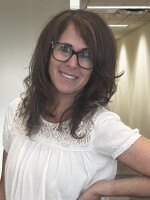
Yvonne Cudney has a juris doctorate and a master's degree in public administration. She is the associate director of community outreach and education coordinator for the Housing Bureau for Seniors, a program of the University of Michigan Health Department of Community Health Services. Prior to this, she practiced law as a legal services attorney representing thousands of tenants in both Michigan and California. Her passion is access to safe, affordable housing for all. Safe, affordable housing leads to improved mental and physical health – and is essential to healthy aging and living.
RESOURCES:
United States Census Bureau: Poverty Status
Washtenaw County Office of Aging Services
Housing Bureau for Seniors on Facebook
WEMU has partnered with the United Way for Southeastern Michigan to explore the people, organizations, and institutions creating opportunity and equity in our area. And, as part of this ongoing series, you’ll also hear from the people benefiting and growing from the investments being made in the areas of our community where there are gaps in available services. It is a community voice. It is 'Washtenaw United.'


Non-commercial, fact based reporting is made possible by your financial support. Make your donation to WEMU today to keep your community NPR station thriving.
Like 89.1 WEMU on Facebook and follow us on X (Twitter).
Contact WEMU News at 734.487.3363 or email us at studio@wemu.org.