TRANSCRIPTION:
Decky Alexander: This is 89.1 WEMU, and welcome to our weekly conversation on equity and opportunity in our county and in our community. I'm your host, Decky Alexander, and I'm honored still and always to welcome you to this week's edition of Washtenaw United. There are constants in this county. Winter is cold and gray. It's best not to drive in downtown Ann Arbor on a football Saturday. And in Ypsilanti and Ann Arbor and communities in between, you can find a human constant on street corners, in walkways, peppered throughout the Art Fair, outside your favorite cafe, diner or bodega. Yes, I am talking about the vendors that power Groundcover News, a nonprofit that quite simply produces a weekly street newspaper that gives a platform to underrepresented voices to build their own story and life. Live and in the WEMU studio are some of the human constants that power this transformational community organization: Lindsay Calka, the managing director and publisher of Groundcover News, and vendor and Groundcover writer and photographer, Mike Jones. Welcome both you to Washtenaw United! Welcome both!
Lindsay Calka: Thank you!
Mike Jones: Thank you for having us!
Decky Alexander: Yes, I am so personally jazzed to have you here! I think I mentioned this to Mike at one of our early outside of Sweetwaters exchanges. That is Mike's beat. And when I took over the show this summer, Groundcover, and by extension, Mike, and I mean this, was the first story interview I wanted to lift up. I thought more people in our county need to know and understand the uniqueness of this organization. So I'm really, really thankful that you're both are here today. Thanks for coming in! All right, so we'll get some questions, and Lindsay, I'll go with you first. Lindsay, I believe that Groundcover was modeled after other cities looking for ways to foster economic autonomy. So what is Groundcover's origin story, and how has it changed and transformed over time?

Lindsay Calka: Absolutely! So we started in 2010, and I love to tell the story because it's short and sweet. Our founder, Susan Beckett, was traveling in Seattle, Washington, and purchased a paper just like Groundcover, called Real Change, while she was out in the town. And so she bought that paper, had that wonderful moment with the vendor and thought, "We need this in Ann Arbor!" So she was just there traveling, so she came back here and organizing to find our church office in Bethlehem United Church of Christ to bring a team of volunteers and then, of course, to make that first paper and invite that first vendor to sell it on the street. So that was in 2010. We celebrated our 15th anniversary last year in a really big way. We're already 16, and we've grown a lot in those 16 years. One, some notable growth is just we are now a biweekly paper. So we were monthly for a really long time, but now we punch out 26 issues a year. We're 16 pages of just local news. Some people think we're just homelessness content, but we're not. We really are a community newspaper that goes at the point of how are we going to cover these stories from the perspective of people most impacted. And we do that because another kind of growth over the years was starting a freelance writing program that Mike is a star in and is in almost all of our papers because vendors are able to get paid to write for the paper. And we have a lot of job programs and opportunities to skill up in journalism and writing. So it's not just showing up to Groundcover and being able to earn money that day selling the paper, but people can become a journalist or a photographer and get compensated to do that.
Decky Alexander: Beautiful! Well, Lindsay, you alluded a little bit to the transformation, and one of the things about Groundcover that I love is that it's really dynamic. So it's probably fair to assume that its current vendors and writers, such as Mike, reflect broader community identities, people's challenges, such as rising adults needing housing, or you can't make ends meet. So what is Groundcover telling us as a community newspaper about our current county? What's bubbling up to the surface?
Lindsay Calka: Wow, that's a great question. Well, if you have even a certain stigma or expectation of what it looks like to be homeless or poor or low-income or just have to hustle to make ends meet, that is not a monolith, right? There's not one idea, one solution, that everyone says "this is the thing." People have very, very dynamic ideas and perspectives, passions, talents, interests, And so that's why it makes Groundcover so, like what you said, dynamic and creative, is because we're not saying, "Hey, write for us and write about how sucky it is to be homeless or exactly what it means to have to go to this hot meal place, right?" Like, people show up in the way that they are. And so our content reflects that. So there are trends. We are seeing actually more and more people who aren't experiencing homelessness selling our paper, people that receive welfare or other government assistance, people that have families that work multiple jobs have to sell Groundcover now to make ends meet because the cost of living is rising and our assistances are not filling the gaps.
Decky Alexander: Thank you, Lindsay. Mike, you're infamous, a Washtenaw County constant and vital contributor as a vendor, writer and photographer for Groundcover. So can you share, Mike, your personal journey with Groundcover and what led you to become a vendor and writer for the paper?

Mike Jones: Yeah, I would say back when Groundcover started in Ann Arbor, panhandling was getting aggressive. So I've seen Groundcover come in and kind of dignify the community with a newspaper, so I wanted to be involved. And so, at this time, I was a cab driver. I was in the Groundcover community, but when cab driving got eliminated by the pandemic and by Uber and Lyft, that's when I really took on Groundcover News full-time. And from there, like 2021 to this point, I've been with Groundcover as a vendor, writer and former board member.
Decky Alexander: What has your writing journey been like as part of Groundcover?
Mike Jones: Oh, it's been a journey, that's for sure. I would say when things were turning left, we turned left with it. As far as writing, we stay on top of the issues that matter and people want to read about.
Decky Alexander: Is there a particular story that you captured or wrote that really, like, stays with you over all this time?
Mike Jones: There's so many, but I would say one of my first stories, my second story for Groundcover News, which was the gentrification of Ann Arbor through my eyes, where I talked about growing up in downtown Ann Arbor and watching it change over the years. And around the '90s is when the gentrification was taking full effect, so that was a story I relish. The longest story I ever wrote--2,500 words.
Decky Alexander: You are listening to Washtenaw United on 89.1 WEMU. I'm Decky Alexander. And today, we are talking with Lindsay Calka and Mike Jones of Groundcover News, a human services oasis for those seeking their own economic path. Mike, for our listeners who see vendors out in the county, what is a typical day in the life of a vendor? Do vendors have a specific beat, locale, connect with customers? So give us a day in the life.
Mike Jones: The day in the life of a Groundcover vendor is going out into the public, finding your area, finding and building community with others through conversation. Like myself, I'm at the Ypsi Food Co-op, Sweetwater Cafe on Cross Street and the YMCA. Them are my spots. So if you want to see me in the morning, that's where I'll be. But yeah, vendors have their different spots, and some spots are hotter than others. Our hottest spot is the Ann Arbor Farmers Market area. That's a real hot spot, and vendors tend to have conflicts and collide with one another in those areas. So, we have a program called the Vendor--
Lindsay Calka: Committee?
Mike Jones: No, not the Vendor, but we have the Corner Card.
Lindsay Calka: Oh yeah, yeah.
Mike Jones: The Corner Card. The sales incentive, so whoever sells the most can have first call on that spot. But, yeah, the life of a vendor is going out into the public, building relationships, getting to know people, and that's how you generate money and things and resources that you might need, being that you're homeless or dealing with poverty.
Decky Alexander: So Lindsay, Groundcover operates simultaneously as a human services organization, an employment center and a media publication. What are some of the unique community challenges and funding barriers you navigate to trying to balance all three of those roles?
Lindsay Calka: That's a good question because it is timely, right? We kind of, just from afar, are observing budgets getting slashed, federal funding disappearing. Groundcover actually, we are affected by that, but not as much because we have four funding streams that are quite equal. Like, we raise money through the sale that the vendors purchase up front, right? If you are new to Groundcover, the vendors are purchasing every paper for 50 cents and then selling that for a profit for $2, so that actually covers printing costs for us. We sell advertising, we do accept individual donations and we try and seek grants. But sometimes, we are seeking out arts and culture grants because our writing program is, we see, a contribution to the arts and cultural community here. We do referral-based. We don't do formal casework. But we are an intervention to homelessness and housing and security. So sometimes we are looking at ourselves as a human service organization and seeking out money that way. But I think that one of the more stable things is that we are a part of community and economic development in this community. You don't have to be homeless to sell Groundcover. You don't have to be homeless to write for the paper. We see that even if homelessness goes away, we need Groundcover because we need people having conversations out in the community. We need independent local news. And we don't want it to just be siloed on phones or social media where you only hear and look at and engage with content that you want to see. You have to face the people that are distributing this content, and you have to talk with the vendors and maybe other community members about the content you see. You don't have to agree with it, but we really value that dialog. And so, there's something else there about what we're doing that doesn't fit the box of just client services or standard media.

Decky Alexander: It really helps foster a more just authentic and inclusive community. I mean, I don't think it's idyllic, it's actual. Is there a particular, Lindsay, story that you love in the Groundcover? I don't want you to call out a specific writer.
Lindsay Calka: This is the hardest question.
Decky Alexander: I know, and I wasn't going to ask it. But as a reader myself, I'm just curious. Is there something for you that's also stuck with you?
Lindsay Calka: Well, OK. I'll tell you this is my answer as of today's date because this changes daily, if not weekly. Something I've been talking a lot with just people in my community is we had a story that was first-person perspective, an essay about someone who was — their experiences taking antipsychotics. And it was very raw and real about how that was dangerous for them and decreased their physical health and mental health. And that's something that, in terms of stigma, we hear all the time. People say, "Why don't you take your meds?," or there's just all this accusation on people with mental health or mental illness. And this just put it out clean. I want it to be in the hands of every single psychiatrist, every single social worker, to understand how the system failed this one person. And I bet all those people that they were interacting with had good intent, yet still they ended up in that situation. So it was in an issue this summer.
Decky Alexander: All right, Lindsay and Mike. As we look toward solutions and building a more just and inclusive Washtenaw, what is the primary takeaway or call to action you want every WEMU listener to walk away with today? So we can start with Mike. What do you want them to take away?
Mike Jones: Community. Taking care of your neighbors, reaching out, lending a hand when someone needs a hand, you know? Just don't just walk by when you see somebody who might be really in need. Take time out and try to hear their story and learn their story. And then, from there, you can assess whether how to help them or whatnot. Yeah.
Lindsay Calka: Buy the paper, read the paper. If you see a Groundcover vendor and you ignore them, that's a mistake. If you give a Groundcover vendor money and don't take the paper, that's also a mistake. If you get the paper and you throw it away without reading it, that's a mistake. We want people to do both things. Part of our mission is fulfilled when people read and engage with this content. It's not a rag, right? We put a ton. There's so much heart and energy put into every single page of Groundcover. So read it cover-to-cover.
Decky Alexander: Well, I want to shout out Mike, who is my vendor, who will also say, "Here's my new story, Decky. Here's what you need to read." So I'm like, "I know!" So that's his opening line, and I take it. And I take the paper and I read it. And it's a consistent honor to do so! That was Lindsay Calka, publisher and managing director, and Mike Jones, vendor and writer of Groundcover News, an organization that covers a lot of ground by giving people in poverty power and purpose to build their own independent life. Washtenaw United is produced in partnership with the United Way for Southeastern Michigan, and you can hear it right here every Monday. I'm Decky Alexander, and this is your community NPR station, 89.1 WEMU, Ypsilanti.

ABOUT GUESTS:
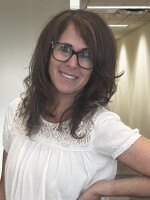
Lindsay Calka
Lindsay started with Groundcover News as a volunteer in 2018, started working for the organization as the design editor in 2019 and transitioned into her current role in May 2021. Calka lives in Ypsilanti and runs a house of hospitality for people experiencing homelessness. She has a Bachelor of Arts and Master's of Social Work from the University of Michigan.
Mike Jones
Mike Jones is a vendor and writer for Groundcover News. He has positively influenced the publication with his articles and photos and has built a customer base in Ann Arbor and Ypsilanti with his consistency and welcoming attitude. He self-published a collection of writing titled “Where is the Outrage?”
RESOURCES:
WEMU has partnered with the United Way for Southeastern Michigan to explore the people, organizations and institutions creating opportunity and equity in our area. And, as part of this ongoing series, you’ll also hear from the people benefiting and growing from the investments being made in the areas of our community where there are gaps in available services. It is a community voice. It is 'Washtenaw United.'


Non-commercial, fact-based reporting is made possible by your financial support. Make your donation to WEMU today to keep your community NPR station thriving.
Like 89.1 WEMU on Facebook and follow us on X (Twitter).
Contact WEMU News at 734.487.3363 or email us at studio@wemu.org.