-
 The role of nitrates in supporting plant growth is well-known, but nitrates also have negative impacts on ecosystems when there is excessive algae growth. WEMU’s Caroline MacGregor talked with U-M Professor of Chemistry Nathaniel Szymczak about his team’s work to reduce nitrates into compounds that could be reused as fertilizer or otherwise recycled.
-
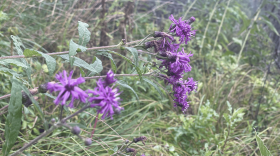 "Hidden In Plain Sight" offers a window into a rare, local ecosystem. WEMU's Joshua Nieman invites you to explore Ypsilanti's Highland Fen.
-
 Washtenaw County's rain garden system has filtered millions of gallons of stormwater runoff every year. Now, the program is expanding further into the county. Catie Wytychak from the Washtenaw County Water Resources Office spoke to Rebekah Warren about the expansion and Ypsilanti's upcoming Fall River Day.
-
 A team of botanists at the University of Michigan developed a phone app capable of identifying native plants that works without an internet connection or cell service. WEMU’s Ana Longoria has the story.
-
 Are you familiar with pocket forests? These are dense plantings of native trees and shrubs that can influence water movement and soil conditions and improve the environment and ecosystem in a targeted area. There are already some in Washtenaw County, and more are coming. WEMU's David Fair talked about the growing number of small-scale ecological projects with Dr. Heather Chen-Yost, who is a volunteer with the Tree Town Urban Forest Team.
-
 Just about 40 miles from our WEMU studios sits a 440-acre lake plain prairie. It’s called the Sibley Prairie, and you’ll find it in Brownstown Township. It is the largest and highest quality lake plain prairie in Michigan. As such, work is underway to try and permanently preserve this rare ecosystem. Jeff Vornhagen is Director-at-Large of the Huron Valley Chapter of the Michigan Botanical Society. He spoke about the preservation project with WEMU's David Fair.
-
 This winter in Washtenaw County has been notably colder and snowier than most of the past decade. It has created inconveniences and hardships. But there may be some benefits to all of the snow and cold. Snowier winters play an important ecological role beyond what we experience at the surface. WEMU's David Fair was joined by U-M Biological Station researcher, Dr. Olivia Vought to explore this winter’s environmental benefits and how it all works.
-
 Invasive plants are not just a backyard nuisance—they’re one of the biggest drivers of long-term habitat loss in the Huron River Watershed. Matthaei Botanical Gardens & Nichols Arboretum in Ann Arbor have become a local model for tackling the problem through coordinated stewardship and public engagement. WEMU's David Fair found out what they’re doing with Natural Areas Specialist, Steven Parrish.
-
 There’s a new educational program that's literally transforming the landscape around Ypsilanti Community Schools, sometimes one sweet potato or pawpaw tree at a time. YCS has launched a new agriscience and botany career technical education program. It's part of a countywide push to expand hands-on learning opportunities for students. Lee Van Roth discussed the program and what it hopes to achieve with Ypsilanti Community High School biology teacher Laurel Wiinikka-Buesser.
-
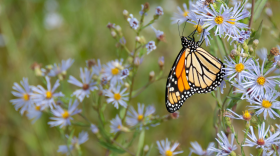 The Ann Arbor City Council is considering easing regulations regarding property owners' lawns. WEMU’s Kevin Meerschaert reports.

© 2026 WEMU

Serving Ypsilanti, Ann Arbor and Washtenaw County, MI
Play Live Radio
Next Up:
0:00
0:00
Available On Air Stations


